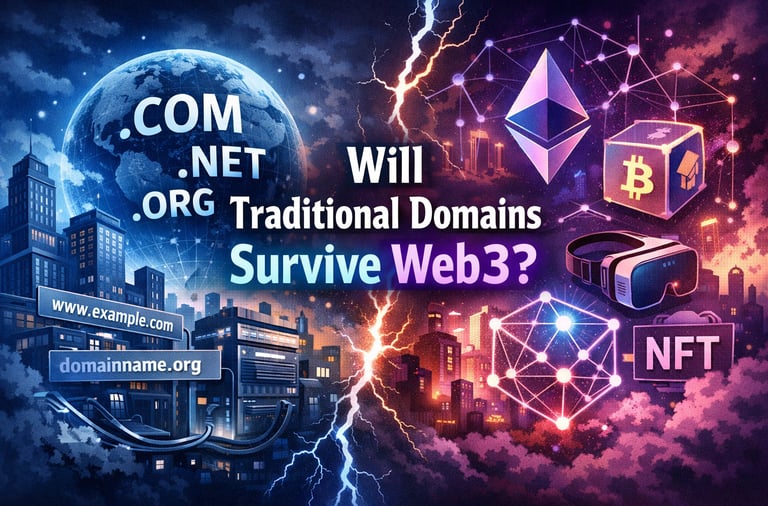
Will Traditional Domains Survive Web3?
GoDIDGo.com
2/18/20268 min read
Introduction: Defining Web3 and Traditional Domains
Web3, often referred to as the next evolution of the internet, signifies a shift towards a decentralized web. This new paradigm leverages fundamental technologies such as blockchain, decentralized applications (dApps), and smart contracts. Blockchains serve as the backbone, ensuring data integrity and trust without reliance on central authorities. Decentralized applications (dApps) operate on blockchain networks, facilitating user interactions in a transparent manner, while smart contracts automate processes through self-executing agreements, minimizing the need for intermediaries.
On the other hand, traditional domains are the digital addresses that are critical to navigating the current landscape of the internet, often termed Web2. These domains function as essential digital assets, acting as the primary identifiers for brands and businesses. They play a significant role in online presence, granting visibility, and establishing authority in the vast digital marketplace. Furthermore, traditional domains are easily purchased and managed, added to by the established systems of registration and renewal through registrars and governing bodies.
The contrast between Web3 and traditional domains lies not only in their technological frameworks but also in their philosophical approaches towards ownership and governance of digital assets. Traditional domains are centrally managed, which poses certain limitations and vulnerabilities, whereas Web3 promotes decentralization, contributing to enhanced security and user autonomy. This distinction is crucial when considering how traditional domains may continue to be relevant or adapt in the age of Web3, offering a compelling framework for analyzing the potential coexistence of these two systems as we progress into a more digitized future.
The Evolution of Digital Real Estate: From Web2 to Web3
The shift from Web2 to Web3 marks a significant transformation in the concept and valuation of digital real estate. In the Web2 ecosystem, digital assets typically consisted of centralized platforms and domains that were controlled by a few major entities. Traditional domains, anchored to centralized websites, operated under a model where ownership and identity were often mismatched. The landscape was characterized by the prominence of social media platforms and large software corporations that maintained control over user data and content.
With the emergence of Web3, however, the paradigm is rapidly changing. Web3 introduces a decentralized internet, powered by blockchain technologies, which fundamentally alters how domains and digital assets are perceived and utilized. In this new environment, decentralized identity systems enable users to establish ownership and control over their data and digital assets, fostering greater trust and autonomy.
As digital real estate evolves in the Web3 ecosystem, the rise of non-fungible tokens (NFTs) has taken center stage. NFTs allow for the creation of unique digital assets whose ownership is verifiable on the blockchain. Such tokens can represent anything from artworks to virtual lands, providing individuals with opportunities to invest in, trade, and create value in ways that were previously impossible. This evolution is impacting investor perceptions; while some continue to regard traditional domains as stable investments, others are turning their attention towards NFTs and decentralized assets with potentially higher returns.
Consequently, as investors assess the value of digital real estate in a decentralized world, their understanding of assets is being reshaped. Traditional domains may still hold significance, but the adaptability and potential of Web3 assets indicate a growing shift in investment strategies focusing on flexibility and innovation.
Domain Names as a Brand Asset: Trust and Memorability
In the arena of digital branding, domain names bear immense potential as a brand asset. They serve as the primary address of a business on the internet and play a critical role in shaping user perceptions. Trust is one of the foremost factors tied to domain names; websites that utilize established and professionally crafted domains tend to evoke a sense of credibility. Users often associate specific domain types, especially those ending in .com, with legitimacy and reliability. This perception not only influences their click-through behavior but also their willingness to engage further with the brand.
Moreover, memorability is another vital aspect linked to domain names. A concise and catchy domain can significantly enhance a brand’s visibility and recall. When consumers can easily remember a business's web address, they are more likely to return, share, or otherwise engage with the brand. As businesses navigate through a crowded digital landscape, having a memorable domain becomes an invaluable competitive edge. It establishes a connection, invoking familiarity that can enhance customer loyalty.
As we delve deeper into the implications of web3 and decentralization, the dichotomy between traditional domains and emerging digital identity models becomes pronounced. While web3 advocates for decentralized identities, the trusted nature of established domain names continues to foster user confidence in traditional web interactions. Users are inherently drawn to familiar structures that signal stability, consistency, and dependability. Thus, domain names remain pivotal in the branding strategies of businesses. Their role in fostering trust and enhancing memorability makes them indispensable, regardless of the evolving digital landscape.
SEO and Traffic Considerations in a Web3 World
As the digital landscape evolves into Web3, there are significant implications for Search Engine Optimization (SEO) and traffic generation strategies. Traditional domains have played a pivotal role in establishing online presence, facilitating visibility, and driving user traffic. Understanding how this will translate into a decentralized web paradigm is crucial for businesses and content creators alike.
In the realm of Web3, current SEO practices may need adaptation due to changing algorithms, user behaviors, and the emergence of decentralized applications (dApps). Unlike traditional domains, which often rely on established search engines and algorithms, decentralized platforms can alter the means by which information is indexed and retrieved. Consequently, the traditional SEO techniques may see a shift. This raises the question of how brands can maintain visibility in a world where traditional indexing no longer dominates.
Despite these transformations, traditional domains may still possess inherent value in establishing credibility and driving traffic in Web3. Users often find comfort and familiarity in conventional domain structures, which can facilitate trust. Brands that aim to bridge the gap between Web2 and Web3 can leverage traditional domains to create an accessible entry-point for their target audience, enhancing engagement and user retention.
Furthermore, content quality remains a fundamental pillar of user engagement, regardless of the underlying technology. High-quality, relevant content will continue to attract traffic, allowing brands to forge strong connections with their audiences. The integration of traditional SEO principles—such as keyword optimization and link-building—into a decentralized framework can yield beneficial outcomes, ensuring the longevity of traffic generation strategies.
Ultimately, while the mechanics of traffic generation will evolve alongside Web3 technologies, the foundational principles of SEO and the relevance of traditional domains will remain significant in navigating this new digital frontier.
Risk, Defensibility, and the Business Strategy of Domains
The advent of Web3 introduces several challenges to the traditional domain landscape that businesses must navigate. One significant risk stems from governance issues inherently tied to decentralized systems. In a decentralized environment, the processes for dispute resolution, policy enforcement, and domain ownership inheritance can become less clear. Unlike traditional domains, which have centralized authorities overseeing registrations and disputes, Web3's distributed nature can lead to ambiguity, making it more difficult for users to defend their digital assets against fraud or malicious activity.
Additionally, the volatility of asset values presents a major concern for stakeholders in traditional domains. While domain names have historically been viewed as stable investments, the dynamic and often unpredictable nature of Web3 assets can lead to erratic fluctuations in value. As cryptocurrencies and tokenized assets rise and fall in value, the economic viability of traditional domains may be called into question. Investors need to incorporate these threats into their risk assessment frameworks to leverage traditional domains effectively within a Web3 context.
Security is another pivotal issue that traditional domain owners must contend with in a Web3 setting. Traditional domains are susceptible to various cybersecurity threats, including domain hijacking and phishing attacks. As the focus shifts toward decentralized identification methods, the landscape for protecting digital properties changes significantly. To mitigate these risks, startup founders and investors should consider multifaceted defense strategies that encompass robust cybersecurity measures, ongoing monitoring, and clear communication on the importance of security protocols.
In crafting viable business strategies, it is essential for domain stakeholders to remain vigilant while exploring the intersection of traditional domains and Web3 technologies. Understanding the nuances of governance, value fluctuations, and security concerns will be imperative in developing a defensible position. By doing so, they can not only protect their investments but also take advantage of the opportunities presented by the evolving digital landscape.
Case Studies: Traditional Domains vs. Web3 Alternatives
As the digital landscape shifts towards decentralization, it is crucial to examine practical examples of traditional domains in contrast with Web3 alternatives. One notable case study involves Unstoppable Domains, a leading decentralized domain service that offers blockchain-based domain names as an alternative to traditional ownership models. Users can purchase a .crypto or .zil domain, enabling greater control and streamlined payments compared to conventional domain systems.
In a comparison with traditional domain registration, Unstoppable Domains allows names to be entirely owned and held in personal wallets, removing the risk of domain disputes and censorship, common issues faced in the traditional Web2 environment. Despite the innovative approach and advantages, challenges persist. The technology underlying decentralized domains is in varying stages of adoption; many users and organizations are still unfamiliar or hesitant to transition from established domain practices.
Another relevant example highlights the plight of traditional domain registration during the 2020s. Amid the surge of demand for digital real estate, disputes surged over domain ownership, price surges, and the opacity in the renewal process. Many businesses found themselves caught in long-term contracts with registrars that, while offering stability, ultimately constrained flexibility and adaptability in branding and presence.
In contrast, blockchain namespaces, such as ENS (Ethereum Name Service), have begun to carve out a unique space. ENS allows users to register .eth names and link their wallets seamlessly. However, this approach has faced scalability challenges. Successful case studies reveal a mixture of triumphs and setbacks within both traditional domains and Web3 alternatives, emphasizing differences in pricing structures, ease of use, and user control.
Each system's strengths and weaknesses foster an ongoing dialogue about which options may better serve individuals seeking to build a brand or community online. Moving forward, continued scrutiny of these two domains will ultimately shed light on their respective impacts on creativity and investment within the evolving digital ecosystem.
Conclusion: The Future of Digital Identity and Possibilities Ahead
As we have explored throughout this blog post, the evolution of the internet from traditional web systems to the decentralized paradigm of Web3 has raised important questions about the future of digital identity. The persistence of traditional domains and their integration with the emerging Web3 technologies represents a complex yet fascinating landscape. The interaction between these two realms is poised to shape the way individuals and organizations establish their online presence.
Stakeholders, including startup founders, investors, and digital asset professionals, must be proactive in understanding the implications of this shift. Traditional domains have long been the cornerstone of online identity, but as decentralized platforms gain traction, the need for adaptation becomes increasingly essential. Founders should consider developing strategies that harness the security and privacy benefits of Web3 while maintaining the functionalities of conventional domains.
Moreover, investors looking to capitalize on the burgeoning field of blockchain technology need to assess the risks and rewards associated with this transformation. Establishing a robust portfolio that includes both traditional domain names and Web3 assets will be vital. This hybrid approach can mitigate risks associated with market volatility as the digital ecosystem continues to evolve.
Finally, digital asset professionals should foster education around these two domains, ensuring they are well-equipped to advise clients in navigating this transitional phase. Creating awareness around the importance of digital identity within the context of both models will be imperative as we move forward.
The future of traditional domains amidst the rise of Web3 hinges on collaboration and innovation. By embracing the potential of decentralized technologies while respecting the established norms of digital identity, stakeholders can prepare for a new era where both systems not only coexist but thrive together.

Get in touch
Feel free to contact us to inquire about any of the Domains & Digital Identity Assets showcased on our platform. We are open to receiving proposals and evaluating direct purchase offers for all the digital assets featured.
Our team is also available to explore tailored agreements and negotiated sales, ensuring a smooth and efficient acquisition process that aligns with your specific needs.
Connect with us to amplify your identity across both the Domains & Digital Identity Assets landscape. Together, let's redefine the future of digital identities and brands.
Contact us now to elevate your DIDs & Brands to new heights, because in the world of Go DID Go! your Digital Identity is not just owned; it's celebrated!
Contact Us
info@godidgo.com
Quick Links:

© 2026 Powered on Hostinger by Go DID Go! and ChatGPT's linguistic finesse: behind the scenes magic!
Empowering the Web3/Onchain evolution. Building bridges between Web2 & Web3.