Tokenized .com Domains in 2026: How Unstoppable Domains is Changing the Game
GoDIDGo.com
3/14/20265 min read
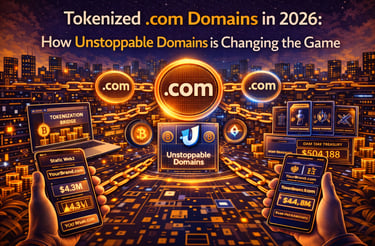
What Are Tokenized .com Domains and How Is Unstoppable Domains Changing the Domain Ownership Model?
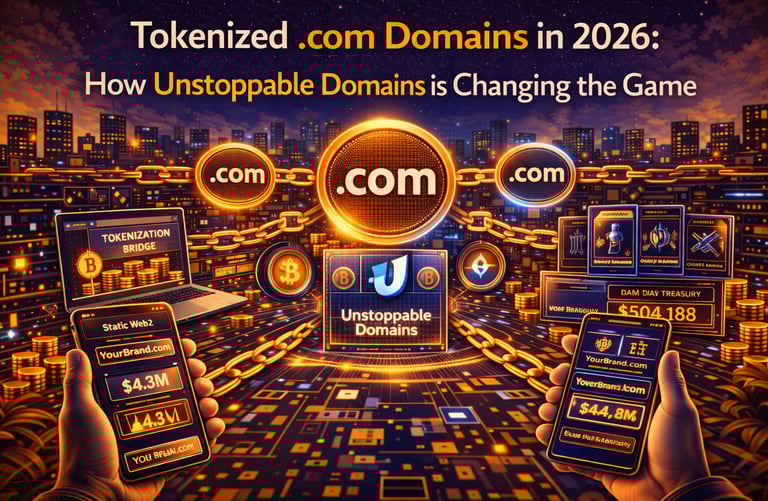
Tokenized .com domains represent a new model of domain ownership in which traditional DNS domain names are linked to blockchain-based tokens that enable programmable control, verifiable ownership, and integration with decentralized applications.
A tokenized .com domain is a traditional DNS domain whose ownership or functionality is represented and managed through blockchain-based tokens and smart contracts.
This model expands the role of domains beyond simple web addresses by enabling them to interact with decentralized finance systems, digital identity frameworks, and programmable infrastructure.
Organizations such as Unstoppable Domains are developing systems that integrate traditional domain names with blockchain infrastructure. This integration allows .com domains to retain compatibility with the Domain Name System while gaining capabilities commonly associated with Web3 identity systems.
For startup founders, investors, and digital asset operators, tokenized domain infrastructure represents a shift in how digital identity, branding, and domain ownership function within the internet economy.
What Is a .com Domain?
Definition of a .com Domain
A .com domain is a top-level domain within the global Domain Name System used by websites, businesses, and online services.
A .com domain is a globally recognized internet identifier that resolves through the DNS to locate websites and digital services.
The .com namespace is one of the most widely adopted domain extensions on the internet and is frequently used as the primary digital identity for companies.
Why .com Domains Hold Strategic Value
The value of .com domains derives from several structural factors:
universal recognition
strong brand association
search engine familiarity
scarcity of premium names
Premium .com domains often function as foundational digital assets for companies and online platforms.
Ownership of a strong .com domain can influence branding, search visibility, and user trust.
What Does Domain Tokenization Mean?
Definition of Domain Tokenization
Domain tokenization is the process of representing domain ownership or domain-related rights as a token on a blockchain.
Tokenization converts domain ownership into a programmable digital asset that can interact with blockchain applications.
This process does not necessarily replace the DNS system. Instead, it introduces a parallel layer of programmable functionality connected to the domain.
Tokenized domains can support features such as:
programmable ownership transfer
automated revenue distribution
decentralized marketplaces
identity verification systems
How Tokenization Changes Domain Ownership
Traditional domain ownership relies on centralized registrars and registry databases.
Tokenization introduces cryptographic ownership verification.
Blockchain tokens allow domain ownership to be verified and transferred without relying exclusively on centralized intermediaries.
This structure enables programmable interactions with domain assets.
How Unstoppable Domains Integrates Blockchain with Domain Ownership
The Role of Blockchain Domain Infrastructure
Unstoppable Domains operates a blockchain-based naming system designed to enable user-controlled digital identities.
In this system, domains are connected to blockchain records that can map to:
cryptocurrency wallet addresses
decentralized websites
authentication credentials
identity metadata
Blockchain domain infrastructure allows domains to function as programmable identity layers across digital ecosystems.
These domains can operate within decentralized applications and blockchain networks.
Examples of Blockchain Domain Extensions
Blockchain naming systems have introduced extensions such as:
.crypto
.dao
.nft
.agent
.AGI
These namespaces provide identity layers for decentralized organizations, artificial intelligence systems, and blockchain-based services.
Some of these domain extensions are expected to apply for recognition as official DNS top-level domains through the governance process managed by the Internet Corporation for Assigned Names and Numbers.
If approved, these domains could gain full DNS compatibility, including browser resolution, website hosting, and email services, while maintaining blockchain-based ownership verification.
Hybrid domain systems can combine traditional DNS compatibility with blockchain identity functionality.
How Tokenized .com Domains Work
Linking DNS Domains to Blockchain Tokens
Tokenized .com domains connect traditional DNS infrastructure with blockchain-based records.
In this model, a blockchain token represents a programmable layer linked to the domain.
The DNS system continues to resolve the domain while the blockchain layer manages programmable ownership and identity features.
This architecture creates a hybrid system.
The DNS layer provides universal accessibility, while the blockchain layer enables advanced functionality.
Smart Contract Management
Smart contracts are programs deployed on blockchain networks that automatically execute predefined rules.
In tokenized domain systems, smart contracts can manage:
domain transfers
revenue distribution
identity updates
access permissions
Smart contracts enable automated management of domain assets without manual intervention.
This automation reduces operational complexity.
Strategic Implications for Investors and Founders
Domains as Programmable Digital Assets
Tokenization transforms domains from static identifiers into programmable infrastructure.
A tokenized domain functions as both a digital identity and a programmable financial asset.
This shift introduces new economic models for domain ownership.
Potential use cases include:
domain leasing markets
tokenized domain investment pools
identity-based payment routing
automated licensing agreements
These mechanisms expand the role of domains within digital economies.
Digital Identity and Brand Defensibility
Companies increasingly rely on domain names as primary digital identifiers.
Ownership of a domain controls how users locate and recognize a brand.
Domain ownership remains one of the most defensible forms of digital branding on the internet.
Tokenization strengthens this ownership by enabling cryptographic verification and programmable management.
Liquidity and Market Efficiency
Traditional domain markets rely on intermediaries and manual transfers.
Tokenized systems can enable faster and more transparent trading.
Tokenization increases the liquidity of domain assets by enabling programmable marketplaces and automated transactions.
This structure can reduce friction in domain investment markets.
SEO and Machine-Readable Identity Systems
Search engines and artificial intelligence systems rely heavily on domain names as primary entity identifiers.
Domains influence:
website indexing
entity recognition
knowledge graph mapping
brand association
A domain name acts as a core identifier used by search engines and AI systems to associate content with organizations.
When domains integrate blockchain identity layers, they can also serve as authentication anchors for decentralized services.
This dual role strengthens the importance of domain infrastructure within digital ecosystems.
Infrastructure Convergence: DNS and Blockchain
The Hybrid Internet Architecture
The internet increasingly consists of multiple interconnected infrastructure layers.
These include:
traditional web services
decentralized applications
blockchain identity systems
artificial intelligence platforms
Hybrid domain infrastructure allows a single identifier to operate across both traditional and decentralized networks.
This interoperability simplifies identity management across digital environments.
Why Hybrid Identity Systems Matter
Organizations operate across numerous digital platforms.
Maintaining separate identities across each system creates operational complexity.
Unified identity systems reduce fragmentation by allowing a single domain identifier to represent multiple services and networks.
Tokenized domains contribute to this unification.
Frequently Asked Questions (FAQ)
What is a tokenized .com domain?
A tokenized .com domain is a traditional DNS domain that is linked to a blockchain-based token, enabling programmable ownership and interaction with decentralized applications.
Does tokenization replace the DNS system?
No. Tokenization typically adds a blockchain layer while the domain continues to function through the traditional DNS infrastructure.
Why are .com domains valuable?
.com domains are widely recognized, scarce, and strongly associated with corporate branding and global internet usage.
What role does blockchain play in domain ownership?
Blockchain can provide cryptographic verification of ownership and enable programmable interactions with domain assets.
What are examples of blockchain domain extensions?
Examples include .crypto, .dao, .nft, .agent, and .AGI, which function within blockchain naming systems.
Can blockchain domains integrate with the traditional internet?
Some blockchain domain extensions may apply for recognition as official DNS top-level domains, which could enable them to support websites, email, and browser resolution while maintaining blockchain ownership records.
Conclusion: Domain Ownership Is Evolving Into Programmable Infrastructure
Domain names have historically served as navigational identifiers for websites.
Blockchain technology introduces a new layer of functionality that allows domains to operate as programmable digital assets.
Tokenized domains combine the universal accessibility of DNS with the programmable capabilities of blockchain infrastructure.
For companies, investors, and digital asset operators, this development represents a structural shift in how digital identity, branding, and domain ownership operate within the modern internet economy.
As domain infrastructure integrates with blockchain systems, domains may increasingly function not only as addresses but also as programmable identity and asset layers within digital ecosystems.

Get in touch
Feel free to contact us to inquire about any of the Domains & Digital Identity Assets showcased on our platform. We are open to receiving proposals and evaluating direct purchase offers for all the digital assets featured.
Our team is also available to explore tailored agreements and negotiated sales, ensuring a smooth and efficient acquisition process that aligns with your specific needs.
Connect with us to amplify your identity across both the Domains & Digital Identity Assets landscape. Together, let's redefine the future of digital identities and brands.
Contact us now to elevate your DIDs & Brands to new heights, because in the world of Go DID Go! your Digital Identity is not just owned; it's celebrated!
Contact Us
info@godidgo.com
Quick Links:

© 2026 Powered on Hostinger by Go DID Go! and ChatGPT's linguistic finesse: behind the scenes magic!
Empowering the Web3/Onchain evolution. Building bridges between Web2 & Web3.