
The Rise of .crypto: Chain-Agnostic Domains for Cross-Platform Identity
GoDIDGo.com
3/23/20264 min read
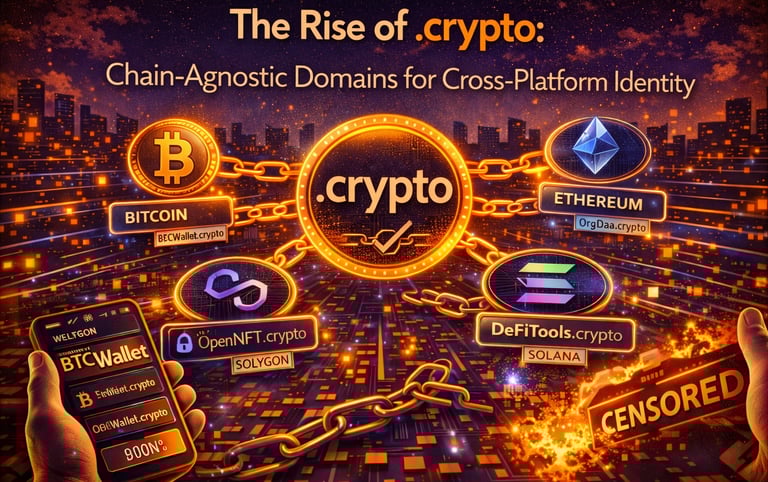
What Is .crypto and Why Are Chain-Agnostic Domains Emerging as a Cross-Platform Identity Layer?
Definition: What Is a .crypto Domain?
A .crypto domain is a blockchain-based domain name that functions as a human-readable identifier for digital assets, decentralized applications, and online identity.
Unlike traditional DNS domains, .crypto domains are recorded on blockchain infrastructure and can map a single readable name to multiple blockchain wallet addresses and digital services.
A .crypto domain is a chain-agnostic identity identifier that allows one name to represent a user, wallet, or application across multiple blockchain networks.
For startup founders, investors, and digital asset operators, .crypto domains represent an emerging naming layer that connects identity, payments, and decentralized applications through a single addressable identifier.
Why Digital Identity Requires Cross-Platform Naming Systems
The digital economy is increasingly fragmented across multiple platforms and blockchain networks.
Users often maintain separate identifiers for:
cryptocurrency wallets
decentralized applications
social platforms
websites
payment addresses
This fragmentation creates operational complexity and identity management challenges.
A cross-platform identity system allows a single identifier to represent a user or organization across multiple digital environments.
Readable domain-based identifiers offer a simple way to unify these systems.
Understanding Chain-Agnostic Domains
A chain-agnostic domain is a name that functions independently of any single blockchain network.
Instead of being tied to one protocol, the domain can store records for multiple blockchain addresses simultaneously.
Chain-agnostic domains allow one human-readable name to map to resources across many blockchain networks.
For example, a domain such as:
alex.crypto
could resolve to:
a Bitcoin address
an Ethereum-compatible wallet
a stablecoin payment address
decentralized application endpoints
The user shares a single name while the domain internally routes transactions or interactions to the appropriate blockchain address.
How .crypto Domains Work
.crypto domains operate as programmable identity records stored on blockchain infrastructure.
Instead of pointing only to an IP address, these domains can store multiple types of resolution data.
Wallet Address Mapping
The most widely used feature of .crypto domains is wallet mapping.
A single domain can store addresses for many blockchain networks.
Wallet mapping allows users to replace complex cryptographic addresses with human-readable names.
For example:
company.crypto
may resolve to wallet addresses across multiple blockchain protocols.
Decentralized Website Resolution
.crypto domains can also resolve to decentralized websites stored on distributed storage networks.
These websites are not hosted on traditional centralized servers.
Blockchain domains can function as entry points to decentralized web infrastructure.
This architecture allows websites to operate independently of traditional hosting providers.
Identity and Application Integration
Domains may also serve as identifiers within decentralized applications.
Applications can associate profiles, credentials, or permissions with a domain name.
A blockchain domain can function as a portable digital identity across applications.
Chain-Agnostic Identity and the Multi-Blockchain Ecosystem
The blockchain ecosystem consists of many independent networks.
Each network has its own addressing system.
Examples include:
payment networks
smart contract platforms
layer-two scaling networks
Without unified naming systems, users must manage separate addresses for each network.
Chain-agnostic domains simplify multi-network interaction by creating a unified identity layer.
Instead of copying long addresses, users can share a single readable domain.
The Strategic Role of .crypto in Digital Asset Infrastructure
Chain-agnostic domains contribute to several structural improvements in digital infrastructure.
Usability Improvements
Cryptographic wallet addresses are long and difficult to verify manually.
Human-readable domains improve usability.
Readable identifiers reduce friction in digital asset transactions.
Identity Portability
Traditional accounts often depend on specific platforms.
Domain-based identity can persist independently of individual applications.
Domain-based identifiers provide a portable identity layer across digital ecosystems.
Brand Identity in Web3
Organizations operating in decentralized ecosystems still require recognizable public identifiers.
Domains serve as these identifiers.
A domain name functions as both a technical identifier and a brand signal.
Projects often use domain-based identity across websites, wallets, and decentralized applications.
Relationship Between Blockchain Domains and DNS Infrastructure
Traditional internet navigation depends on the Domain Name System (DNS).
Blockchain domains currently operate in parallel naming systems.
However, future integration may reduce this separation.
Some blockchain domain providers plan to apply for recognition in future ICANN generic top-level domain (gTLD) application rounds.
If approved, extensions such as:
.crypto
.dao
.nft
.agent
.AGI
could gain full DNS capabilities.
These capabilities may include:
universal browser resolution
website hosting
email infrastructure
Hybrid domain systems could therefore function both as DNS addresses and blockchain-native identity identifiers.
This dual functionality would connect traditional web infrastructure with decentralized identity systems.
Implications for Investors and Digital Asset Operators
The rise of chain-agnostic domains introduces several strategic considerations.
Digital Identity as an Asset
Domains increasingly function as digital identity infrastructure.
Organizations depend on stable identifiers for communication and brand recognition.
Control over a recognizable domain name can influence long-term digital positioning.
Naming Scarcity and Market Dynamics
Memorable domain names remain limited resources.
Scarcity creates economic value in naming markets.
Naming scarcity contributes to the investment potential of premium digital identifiers.
Infrastructure Interoperability
Digital asset ecosystems benefit from systems that operate across platforms.
Chain-agnostic domains support interoperability.
Interoperable naming systems reduce fragmentation in decentralized networks.
Challenges and Operational Considerations
Despite the advantages of chain-agnostic domains, several challenges remain.
Browser Support
Traditional browsers primarily support DNS domains.
Access to blockchain domains may require compatible browsers or resolution gateways.
Browser compatibility influences the accessibility of blockchain domains.
Security and Key Ownership
Ownership of blockchain domains is controlled through cryptographic keys.
Secure key management is therefore critical.
Loss of private keys can result in loss of domain control.
Ecosystem Standardization
Multiple naming systems exist within decentralized ecosystems.
Long-term adoption may depend on interoperability standards.
Standardization improves compatibility across platforms and applications.
FAQ: .crypto Domains and Chain-Agnostic Identity
What is a .crypto domain?
A .crypto domain is a blockchain-based domain name that maps a human-readable identifier to digital resources such as wallet addresses, decentralized websites, or identity records.
What does chain-agnostic mean in domain systems?
Chain-agnostic means that a domain can store records for multiple blockchain networks rather than being limited to one specific chain.
How do .crypto domains simplify crypto transactions?
Users can send digital assets to a readable domain name instead of entering a long cryptographic wallet address.
Can .crypto domains host websites?
Yes. .crypto domains can resolve to decentralized websites stored on distributed storage networks.
Could .crypto become part of the traditional DNS?
Some providers plan to apply for ICANN recognition in future gTLD rounds. If approved, .crypto domains could gain full DNS functionality while retaining blockchain features.
Why are chain-agnostic domains important for digital identity?
Chain-agnostic domains allow a single identifier to function across multiple blockchain networks and digital applications.
Conclusion
Digital ecosystems increasingly operate across multiple platforms and blockchain networks.
Managing identity across these systems requires unified naming infrastructure.
.crypto domains provide a chain-agnostic naming system that allows a single human-readable identifier to represent digital identity across multiple networks.
By mapping one name to multiple blockchain resources, these domains simplify payments, improve usability, and support portable identity.
As decentralized technologies evolve, chain-agnostic domains may become a foundational layer for cross-platform digital identity and asset interaction.

Get in touch
Feel free to contact us to inquire about any of the Domains & Digital Identity Assets showcased on our platform. We are open to receiving proposals and evaluating direct purchase offers for all the digital assets featured.
Our team is also available to explore tailored agreements and negotiated sales, ensuring a smooth and efficient acquisition process that aligns with your specific needs.
Connect with us to amplify your identity across both the Domains & Digital Identity Assets landscape. Together, let's redefine the future of digital identities and brands.
Contact us now to elevate your DIDs & Brands to new heights, because in the world of Go DID Go! your Digital Identity is not just owned; it's celebrated!
Contact Us
info@godidgo.com
Quick Links:

© 2026 Powered on Hostinger by Go DID Go! and ChatGPT's linguistic finesse: behind the scenes magic!
Empowering the Web3/Onchain evolution. Building bridges between Web2 & Web3.