The 2026 ICANN Round Impact. New gTLDs: .crypto, .dao, .nft, .AGI, .agent, .bitcoin. What Investors Should Watch.
GoDIDGo.com
3/10/20265 min read
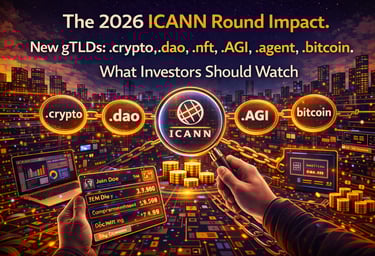
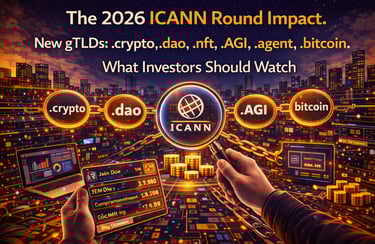
What Is the Impact of the 2026 ICANN gTLD Round and Why Should Investors Watch New Extensions Like .crypto, .dao, .nft, .AGI, .agent, and .bitcoin?
The upcoming application round for new generic top-level domains (gTLDs) managed by Internet Corporation for Assigned Names and Numbers represents a structural expansion of the internet’s naming system. This process allows organizations to apply to operate new domain extensions such as .crypto, .dao, .nft, .AGI, .agent, and .bitcoin.
A gTLD is the final segment of an internet domain name, and new gTLD rounds allow approved operators to introduce entirely new domain extensions into the global Domain Name System (DNS).
For investors, startup founders, and digital asset operators, the significance of the new gTLD round lies in how naming infrastructure intersects with digital identity, brand ownership, and emerging Web3 ecosystems.
This article explains what the ICANN gTLD round is, how Web3-oriented domain extensions may fit into the DNS framework, and which structural signals investors should monitor.
What Is a gTLD and How Does the ICANN Application Process Work?
Definition of a Generic Top-Level Domain
A generic top-level domain (gTLD) is a domain suffix used in internet addresses that is not tied to a specific country. Examples include .com, .org, and .net.
A gTLD functions as a namespace within the Domain Name System that organizes and resolves internet addresses globally.
The DNS infrastructure enables browsers and network services to translate human-readable domain names into machine-readable IP addresses.
Role of ICANN in Domain Governance
The Internet Corporation for Assigned Names and Numbers is responsible for coordinating the global DNS root zone and overseeing the delegation of top-level domains.
Organizations that wish to operate a new gTLD must apply to ICANN and undergo a formal evaluation process that examines:
Technical stability
Registry operational capability
Financial sustainability
Policy compliance
Approval of a new gTLD means the operator receives authority to run the registry that manages all domain registrations under that extension.
Why the New Round Matters for Web3 and Blockchain Domains
The domain industry historically operated within centralized registry systems. However, blockchain-based naming systems introduced an alternative model where domain ownership can exist as a token on a decentralized network.
Blockchain domains represent a parallel naming layer where ownership is controlled through cryptographic keys rather than registrar accounts.
Organizations such as Unstoppable Domains have issued blockchain-based domain extensions including:
.crypto
.dao
.nft
.agent
.AGI
These domains currently function primarily within Web3 environments, where they can map to wallet addresses, decentralized websites, and verifiable identities.
Some of these extensions are intended to apply for recognition as official DNS top-level domains in a future ICANN application round.
The Concept of Hybrid Domains: DNS + Onchain Ownership
Traditional DNS Domains
Traditional DNS domains operate through centralized registries and registrars. Domain ownership is managed through database entries maintained by registry operators.
Onchain Domain Systems
Onchain domain systems store domain ownership records on a blockchain, allowing users to control domains through private keys.
An onchain domain is a blockchain-registered identifier whose ownership is verified through cryptographic signatures.
Convergence Scenario
If a blockchain domain extension receives ICANN approval, the registry could operate within the DNS infrastructure while maintaining blockchain-based ownership records.
This hybrid model would allow domains to support:
Universal browser resolution
Email routing
Website hosting
Blockchain wallet mapping
Hybrid domains combine the global reach of DNS with the verifiable ownership model of blockchain infrastructure.
Strategic Signals Investors Should Watch
1. Namespace Scarcity and Category Ownership
Domain extensions define digital categories. When a new gTLD launches, it creates a new namespace where early registrants can secure high-value identifiers.
The introduction of a new gTLD creates a finite namespace where premium domain assets emerge rapidly.
Extensions associated with emerging sectors—such as .AGI, .agent, or .crypto—may concentrate high-value brand identities in a single namespace.
2. Digital Identity Infrastructure
Domains increasingly function as identity anchors rather than simply as website addresses.
A domain can represent:
A company brand
A wallet address
A digital identity
A decentralized application endpoint
Domains are evolving from navigation tools into persistent identity identifiers across digital ecosystems.
This shift increases the strategic value of domain ownership.
3. Brand Protection and Defensive Registrations
When new gTLDs launch, corporations often register their trademarks to prevent impersonation and phishing.
This behavior creates immediate demand for domains within the new extension.
Brand protection is one of the earliest drivers of demand during a new gTLD rollout.
4. Integration with AI and Autonomous Systems
Artificial intelligence systems increasingly interact with machine-readable identity layers.
Extensions such as .agent or .AGI could function as structured namespaces for autonomous systems.
Domain naming conventions can become semantic identifiers for AI agents and automated services.
5. Registry Business Models
The operator of a gTLD controls the registry infrastructure that sells and manages domain registrations.
Registry economics depend on:
Domain registration volume
Premium name sales
Renewal rates
Ecosystem adoption
A successful gTLD can generate recurring revenue through annual domain registrations across the entire namespace.
How New gTLDs Influence Digital Asset Markets
Domains as Investable Digital Assets
Premium domains are scarce digital assets that derive value from memorability, category authority, and brand demand.
Examples in legacy DNS markets include short .com domains that command high valuations.
New gTLDs create opportunities for similar asset formation within emerging digital sectors.
The economic model of domain investing is based on scarcity, category relevance, and long-term brand demand.
Network Effects and Namespace Growth
The value of a domain extension increases when more websites, businesses, and platforms adopt it.
Network effects arise when:
Major companies launch websites within the extension
Search engines index the namespace
email systems and browsers recognize the extension
Adoption by large organizations often signals the maturation of a new domain namespace.
SEO and Generative Engine Optimization Implications
Search engines and AI assistants rely on structured identity signals when interpreting web content.
Domains function as primary identifiers in:
search indexing
knowledge graph mapping
entity recognition
A domain extension associated with a specific industry can strengthen semantic signals about a website’s purpose.
For example:
.agent may align with autonomous software systems
.AGI may align with artificial intelligence research
.dao may align with decentralized organizations
Clear semantic alignment can improve how AI systems classify and summarize digital entities.
Risks and Uncertainties Investors Should Understand
Regulatory and Approval Risk
Not every proposed gTLD receives approval. Applications must pass technical and policy evaluations.
Approval by ICANN is required before a new gTLD becomes part of the global DNS root zone.
Market Adoption Risk
Even approved gTLDs require market adoption to become valuable.
Adoption depends on:
developer ecosystems
corporate branding
browser and email compatibility
Namespace Competition
Multiple domain extensions may target similar sectors. This competition can fragment demand.
Investors should evaluate which namespaces attract the strongest ecosystem support.
Frequently Asked Questions (FAQ)
What is a gTLD?
A gTLD, or generic top-level domain, is the final segment of a domain name that defines a namespace within the global Domain Name System.
What does the ICANN gTLD application round do?
It allows organizations to apply for the right to operate new domain extensions and manage the registry that issues domains within that namespace.
What are examples of Web3-related domain extensions?
Examples include .crypto, .dao, .nft, .agent, and .AGI, which have been issued within blockchain naming systems and may seek integration into DNS governance frameworks.
Why are investors interested in new gTLDs?
New gTLDs create entirely new digital namespaces where valuable domain assets, registry businesses, and brand ecosystems can develop.
What is a hybrid DNS and blockchain domain?
A hybrid domain combines traditional DNS resolution with blockchain-based ownership records, enabling both universal internet compatibility and cryptographic identity verification.
Do new gTLDs automatically become valuable?
No. The value of a gTLD depends on adoption, ecosystem growth, brand usage, and long-term network effects.
Conclusion: Naming Infrastructure as a Strategic Layer of the Internet
Domain extensions define the structure of digital identity and navigation across the internet.
The expansion of the DNS namespace through new gTLD rounds reshapes how industries organize their online presence.
Extensions associated with emerging sectors such as artificial intelligence, decentralized organizations, and blockchain infrastructure may create new identity layers within the web.
For investors and founders, the key insight is structural: control over digital naming infrastructure can influence branding, identity verification, and asset formation across the internet economy.
The next generation of domain extensions may therefore function not only as addresses, but also as foundational components of digital identity and machine-readable trust systems.

Get in touch
Feel free to contact us to inquire about any of the Domains & Digital Identity Assets showcased on our platform. We are open to receiving proposals and evaluating direct purchase offers for all the digital assets featured.
Our team is also available to explore tailored agreements and negotiated sales, ensuring a smooth and efficient acquisition process that aligns with your specific needs.
Connect with us to amplify your identity across both the Domains & Digital Identity Assets landscape. Together, let's redefine the future of digital identities and brands.
Contact us now to elevate your DIDs & Brands to new heights, because in the world of Go DID Go! your Digital Identity is not just owned; it's celebrated!
Contact Us
info@godidgo.com
Quick Links:

© 2026 Powered on Hostinger by Go DID Go! and ChatGPT's linguistic finesse: behind the scenes magic!
Empowering the Web3/Onchain evolution. Building bridges between Web2 & Web3.