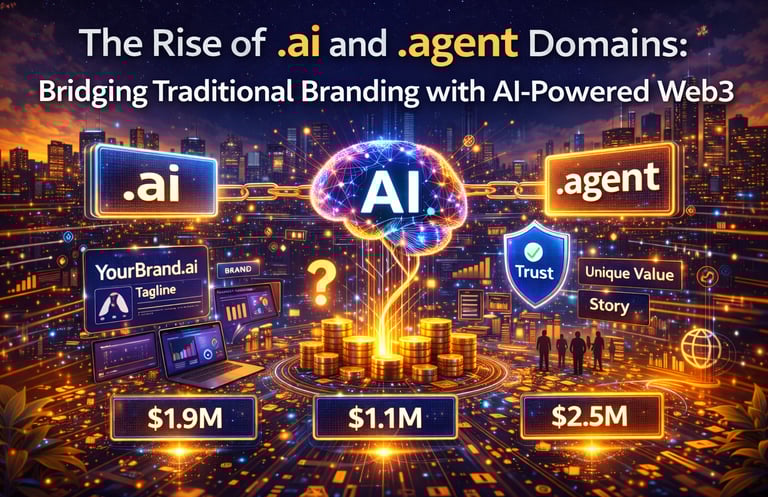
The Rise of .ai and .agent Domains: Bridging Traditional Branding with AI-Powered Web3
GoDIDGo.com
2/28/20267 min read
Introduction to the Evolving Digital Landscape
The digital landscape is undergoing a significant transformation, driven primarily by advancements in artificial intelligence (AI) technologies and the emergence of Web3. As traditional domains continue to dominate the online ecosystem, there is a noticeable shift towards specialized domain extensions that reflect the growing importance of AI, such as .ai and .agent. These new extensions not only cater to innate technological trends but also enhance branding strategies for companies venturing into this new digital frontier.
AI has revolutionized numerous sectors, making it imperative for businesses—especially startups—to adopt a digital presence that resonates with innovation. The .ai domain, for instance, has gained traction among startups and tech companies by signaling a commitment to AI-driven solutions. Similarly, the .agent domain is becoming highly relevant as businesses seek to enhance their online identity in a space characterized by advanced AI interactions, such as autonomous agents and conversational interfaces.
For venture capitalists and investors, the shift towards these specialized domains presents a promising opportunity to align their investments with cutting-edge technologies. As startups establish their brand in an increasingly AI-centric world, the choice of domain can significantly influence their perception in the market. A strategic domain name enhances credibility and positions ventures as forward-thinking and innovative, attributes highly sought after by investors in today’s rapidly evolving marketplace.
In conclusion, understanding the significance of the evolving digital landscape—with a particular emphasis on AI and Web3—is crucial for businesses looking to stay competitive. The rise of specialized domains such as .ai and .agent reflects not only technological innovations but also a shift in how digital branding is approached, shaping the future of online presence for many organizations.
The Significance of .ai and .agent Domains
The emergence of .ai and .agent domains marks a pivotal evolution in web branding, particularly relevant in an era defined by technological advancement and artificial intelligence integration. These domains are not merely extensions; they symbolize innovation and strategic positioning for businesses that leverage AI solutions. The appeal of these domains lies primarily in their capacity to enhance brand perceptions within the tech sector.
Typically, .ai domains are associated with artificial intelligence companies, allowing organizations to project a forward-thinking image. This branding element positions businesses favorably among investors and customers, who are increasingly recognizing the importance of AI capabilities. The .agent domain, on the other hand, speaks to a more specific audience, often encompassing service-oriented platforms that utilize AI technologies to streamline operations or enhance user experience. By adopting these domains, companies signal their commitment to innovation and modernity, a crucial factor as the tech landscape continues to evolve.
The rising popularity of .ai and .agent domains further influences digital real estate dynamics, significantly impacting both perceived and actual market value. As companies seek to establish a digital presence, the choice of domain extension becomes essential for differentiation purposes. A well-chosen domain can strengthen credibility, attract potential investors, and enhance user trust in a company's capabilities. This is particularly relevant as consumers increasingly associate specific domain endings with the quality and reliability of the services offered.
In summary, the significance of .ai and .agent domains cannot be overlooked in today’s rapidly advancing digital landscape. They represent a strategic opportunity for businesses aiming to align themselves with innovation, enhance their brand image, and increase their marketability and credibility in an increasingly competitive environment.
Branding and Memorability in the Age of AI
In today’s competitive landscape, effective branding has become increasingly vital for businesses aiming to stand out. With the surge in artificial intelligence and the integration of .ai and .agent domains, organizations have a unique opportunity to strengthen their brand identity. These domains not only reflect a commitment to innovation but also suggest a higher level of expertise in technology, which can engender trust among potential customers.
Utilizing .ai domains can contribute significantly to memorability, as they immediately convey a connection to artificial intelligence. This association can be particularly beneficial in sectors such as tech, finance, and healthcare, where consumers increasingly seek solutions driven by cutting-edge technology. Moreover, the .agent extension resonates well with service-oriented businesses, promoting the notion of assistance and expertise while enhancing brand recall.
To effectively leverage these domains for branding, businesses should focus on creating cohesive brand narratives that harmonize with their chosen extensions. For instance, incorporating AI-driven features into the brand experience can promote differentiation in a crowded market. Employing user-centric design principles can enhance customer engagement, thereby fostering loyalty.
Furthermore, branding strategies should emphasize clarity and consistency across all touchpoints, making it easier for customers to recognize and remember the brand. Social media presence, content marketing, and customer service interactions should echo the brand’s voice while reinforcing its association with innovation and intelligence from the .ai or .agent domains.
As businesses adapt to the evolving landscape, understanding the implications of these extensions on growth metrics and market positioning is crucial. Properly branded .ai and .agent domains can illustrate a brand's commitment to emerging technologies and enhance customer perceptions, ultimately leading to sustained competitive advantages.
SEO Considerations: Leveraging Domains for Traffic Growth
The emergence of .ai and .agent domains presents unique opportunities for businesses looking to enhance their online visibility. Utilizing these specific domain extensions not only aligns with the modern technological landscape but also contributes significantly to search engine optimization (SEO) strategies. By incorporating relevant keywords and branding elements within the domain name, organizations can increase their chances of appearing higher in search engine results pages (SERPs).
One of the pivotal advantages of .ai and .agent domains is their inherent association with artificial intelligence and autonomous systems. This alignment can attract a niche audience interested in AI technologies and solutions. To capitalize on this, businesses should strategically incorporate popular and relevant keywords into their content, thereby improving keyword relevance and boosting their SEO efforts. This approach aids search engines in understanding the context of their offerings, thus improving organic search rankings.
Additionally, adopting a .ai or .agent domain requires careful consideration of the website's content structure and user experience. Optimizing on-page elements such as meta tags, headings, and image alt texts with keywords related to AI or agent functionalities can further enhance SEO. Furthermore, creating high-quality, informative content that engages visitors and encourages backlinks will support overall digital marketing initiatives and drive traffic growth.
Social signals also play a vital role in SEO performance. By promoting content through social media and engaging with audiences interested in AI, businesses can enhance authority and relevance, leading to improved visibility in search results. Building a well-rounded digital presence that encompasses robust SEO strategies will ultimately position organizations to leverage the full potential of their .ai or .agent domains.
Assessing Risk and Defensibility in Digital Brand Strategy
The adoption of new domain extensions, such as .ai and .agent, offers innovative branding opportunities, yet it also entails certain risks that must be evaluated carefully. When integrating these extensions into a digital brand strategy, businesses should consider the long-term defensibility of their chosen domain. Traditional domains have established trust, whereas newer extensions may still need to gain recognition and acceptance from consumers and search engines alike.
One of the primary risks associated with adopting new domain extensions is the potential for consumer confusion. As individuals become accustomed to traditional domains, an unfamiliar extension could result in a lack of clarity regarding the brand's legitimacy. Businesses need to recognize the brand value tied to traditional domains and weigh it against the potential benefits of a modernized extension. Clear communication and marketing efforts can help bridge this gap and enhance consumer trust.
Navigating investor expectations is another aspect that companies must consider when reassessing their digital branding strategies. Investors may have preconceived notions about the viability of traditional versus new domains, impacting their perception of the brand's potential. It is essential for businesses to provide thorough analyses and demonstrate how adopting novel extensions aligns with future trends and digital innovation. Engaging discussions with stakeholders can preserve investor confidence, even amidst initial skepticism.
To mitigate risks while maximizing brand potential, companies should adopt a hybrid approach, utilizing both traditional and new domain extensions strategically. Maintaining a presence on a well-established domain can serve as a safety net, while simultaneously exploring the innovative branding associated with .ai and .agent extensions. This dual strategy not only enhances the brand's visibility but also showcases its commitment to embracing technological advancements. Thoughtful planning will enable brands to protect their identity and facilitate a smoother transition into the evolving digital landscape.
Successful Brands Utilizing .ai and .agent Domains
The adoption of .ai and .agent domains has been transformative for numerous companies in the tech sector. For instance, the prominent AI-driven startup, OpenAI, has effectively leveraged the .ai domain to brand itself as a leader in artificial intelligence research. By choosing this specific nomenclature, OpenAI not only enhances its visibility but also establishes credibility amongst its audience and investors who prioritize innovation in AI.
Another compelling example is the travel technology platform, Hello.ai. By integrating the .ai domain, Hello.ai has positioned itself at the intersection of technology and user engagement in travel. Their branding strategy centers around providing intelligent solutions, resulting in substantial growth and raising significant venture capital by appealing to the market's forward-thinking approach.
Additionally, the customer service software company, LiveAgent, illustrates the potential of the .agent domain. By using this top-level domain, LiveAgent emphasizes its focus on enhancing customer interactions through AI-based services, effectively communicating its mission to prospective users and investors alike. This strategic branding decision plays a crucial role in differentiating its offerings from competitors in the customer service space. Not only has the company enhanced its brand recognition, but it has also fostered investor trust and engagement, leading to significant business growth.
These case studies exemplify how .ai and .agent domains are not mere extensions but integral components of branding strategies that enhance visibility and engagement. The natural alignment of domain choice with business objectives allows these companies to convey their dedication to innovation and customer satisfaction. Start-up founders and investors should consider the strategic implications of selecting domain names that resonate with technological advancements in their respective industries.
Conclusion: Embracing the Future of Digital Branding
As we have explored throughout this blog post, the emergence of .ai and .agent domains marks a significant shift in the landscape of digital branding. These domains not only symbolize the rise of artificial intelligence and Web3 technologies but also offer a unique opportunity to blend traditional branding strategies with modern digital assets. Startups, investors, and venture capitalists who understand and utilize these domains can capitalize on their potential advantages in a rapidly evolving market.
The adoption of .ai domains streamlines the establishment of brand identity in the realm of artificial intelligence, facilitating trust and recognition in innovative projects. Meanwhile, .agent domains represent a forward-thinking approach that caters to the increasing integration of AI in various sectors, including finance, marketing, and customer service. As more individuals and enterprises turn to these domains, the influence they wield in shaping user perception and engagement will become increasingly pronounced.
Furthermore, as we've noted, the implications of these domains extend beyond branding; they also reflect broader trends in technology and consumer behavior. The convergence of traditional business models with Web3 innovations underscores the need for founders and investors to remain agile and adaptive. By leveraging .ai and .agent domains, companies can position themselves at the forefront of this transformation, attracting interest from stakeholders and amplifying their market impact.
In conclusion, the rise of .ai and .agent domains represents not merely an opportunity for branding but also a paradigm shift in how businesses will operate in the digital landscape of the future. By embracing these domains, businesses can fortify their presence, enhance their credibility, and navigate the complexities of the new digital economy effectively.

Get in touch
Feel free to contact us to inquire about any of the Domains & Digital Identity Assets showcased on our platform. We are open to receiving proposals and evaluating direct purchase offers for all the digital assets featured.
Our team is also available to explore tailored agreements and negotiated sales, ensuring a smooth and efficient acquisition process that aligns with your specific needs.
Connect with us to amplify your identity across both the Domains & Digital Identity Assets landscape. Together, let's redefine the future of digital identities and brands.
Contact us now to elevate your DIDs & Brands to new heights, because in the world of Go DID Go! your Digital Identity is not just owned; it's celebrated!
Contact Us
info@godidgo.com
Quick Links:

© 2026 Powered on Hostinger by Go DID Go! and ChatGPT's linguistic finesse: behind the scenes magic!
Empowering the Web3/Onchain evolution. Building bridges between Web2 & Web3.