
Top Naming Mistakes AI Founders Make
GoDIDGo.com
2/17/20267 min read
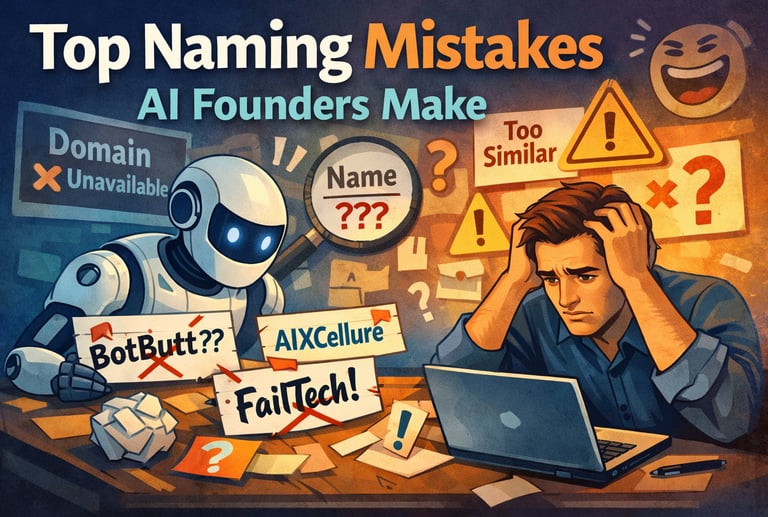
The Power of a Name in the AI Landscape
In the rapidly evolving world of artificial intelligence, the significance of a well-chosen company name cannot be overstated. A name serves as the first point of contact with potential customers, investors, and partners, encapsulating the essence of a business while also offering insights into its mission and strategy. For AI startups, where competition is fierce and innovation is paramount, the right name can greatly influence market perception and future success.
The branding of an AI company plays an essential role in distinguishing it from its competitors. A unique and memorable name can create a lasting impression, which is particularly critical in an industry that is often seen as complex and intimidating. This memorability not only aids in customer recall but also reinforces the company’s identity and its differentiating factors. Startups that invest time in developing a compelling name often find that this effort yields dividends in the form of customer trust and loyalty.
Moreover, a name has the power to shape investor perception. In an industry driven by funding and venture capital, a clever and professionally curated name can trigger an emotional response, attracting interest and investment. Investors are often looking for signs of innovation and creativity, traits that a startup's name can embody. This aspect becomes even more pertinent in the AI landscape, where conveying advanced technology and forward-thinking is pivotal.
Ultimately, choosing a name in the AI sector is not simply a branding exercise; it is a strategic move that can significantly impact a startup's positioning in the market. Understanding the implications of a name sets the stage for the subsequent discussions on common naming mistakes that founders may encounter. As we explore these pitfalls, it becomes clear that navigating the naming landscape is essential for establishing a successful AI venture.
Understanding the Importance of SEO in Naming
For AI founders, naming their startup is a critical step that can influence long-term success. One of the most common mistakes made is neglecting Search Engine Optimization (SEO) considerations when selecting a name. Ignoring these principles can severely limit a company's online visibility, making it challenging to attract both potential investors and customers.
When choosing a name, founders should focus on incorporating relevant keywords related to their industry, products, or services. These keywords enhance digital discoverability, allowing users to find the business more easily through search engines. If a name is too generic or unrelated to the core offerings, it may not appear in search results that potential customers are using to seek similar solutions.
Moreover, modern consumers typically conduct extensive online research before making purchasing decisions. They are likely to search for products or services using specific terms that reflect their needs. If an AI startup fails to include these keywords in its name, it risks being overshadowed by competitors who have made more strategic naming choices.
Additionally, incorporating SEO elements can improve a company's ability to gain traction in online marketing campaigns. For instance, a well-optimized name can lead to better performance in pay-per-click advertising, social media outreach, and content marketing initiatives. Ultimately, this approach increases the likelihood of capturing an audience's attention and converting them into devoted customers.
In summary, AI founders should prioritize SEO considerations when naming their startups. By choosing a name that resonates with relevant keywords, companies can enhance their visibility, attract a wider audience, and foster growth in an increasingly competitive marketplace.
Choosing a name for a startup is a pivotal decision that can significantly impact brand perception and memorability. When founders select names that lack distinctiveness or emotional resonance, they inadvertently hinder the potential for brand trust and customer recall. A memorable name can serve as a powerful linchpin for a brand's identity, fostering recognition and customer loyalty. In contrast, names that are bland or easily forgotten tend to create a barrier between the company and its target audience.
For instance, consider two hypothetical startups: "Tech Innovations Corp" and "BrightSpark Technologies." The former, though descriptive, lacks the punch needed to stand out in an overcrowded market. On the other hand, "BrightSpark Technologies" elicits curiosity and evokes positive imagery, making it more likely to linger in the minds of consumers. This distinction emphasizes the importance of selecting names that are not only unique but also conducive to an emotional connection.
Research has shown that names that are simple yet evocative—such as those that use metaphor, alliteration, or wordplay—tend to perform better in establishing brand recall. Companies like Google and Apple are prime examples of how unconventional names can create a strong brand presence. Their names are easy to remember and resonate well with customers, which in turn can instill a sense of trust and confidence in the brand.
Furthermore, investor confidence can also hinge on a brand's memorability. A name that is catchy and memorable can evoke curiosity and interest from potential investors, aligning with their search for innovative and promising ventures. Hence, it is imperative that AI founders prioritize memorability in their naming strategies, ensuring that their brand can forge lasting connections within the marketplace and thrive amidst competition.
Mistake #3: Failing to Communicate Value Proposition
In the rapidly evolving landscape of artificial intelligence, it is crucial for founders to ensure that their product or service names clearly articulate their unique value propositions. A compelling name can serve as an introductory pitch, effectively conveying the benefits and insights that potential users can expect. When a name fails to communicate this essential aspect, it often leaves customers confused about the offering, which can ultimately hinder market penetration and brand recognition.
A name that lacks specificity and relevance may lead to the perception that the AI product is generic. Founders must align their branding with their business strategies by choosing names that reflect their core functionalities, advantages, and the specific problems they aim to address. This alignment not only enhances brand recognition but also fosters customer trust. Clear communication of the value proposition can establish a strong emotional connection between the brand and its users, making them more likely to engage with the product.
On the other hand, opting for vague or overly generic names poses significant risks. Such names do not differentiate the product from its competitors, which can lead to missed opportunities for market visibility. In a market saturated with similar solutions, a name that does not encapsulate the distinctive benefits may result in reduced interest from potential customers. Therefore, AI founders should devote ample time and thought to crafting names that resonate with their target audience while reflecting their unique selling points.
Ultimately, ensuring that a name effectively communicates the value proposition is an investment in the long-term success of the brand. By taking this aspect seriously, founders can pave the way for stronger brand awareness and improved customer loyalty.
Mistake #4: Overcomplicating the Naming Process
In the landscape of artificial intelligence, a significant pitfall faced by AI founders is the tendency to overcomplicate the naming process for their products or companies. While the urge to convey technical sophistication and innovative capability is understandable, excessively complex or technical names can alienate potential users and investors. This is particularly crucial in a field where clarity and accessibility are paramount for broader audience engagement.
Names that are cumbersome or filled with jargon can create barriers, making it difficult for prospective customers to connect with the product. When potential users encounter a name that is difficult to pronounce or understand, they may be deterred from exploring the technology further. Similarly, investors seeking to identify viable opportunities in the AI sector might overlook a product simply because its name does not resonate or lacks clarity. A straightforward, memorable name can be instrumental in fostering a positive initial impression.
To mitigate this issue, founders should consider several strategies to simplify the naming process while still conveying an essence of sophistication and innovation. One effective approach is to incorporate common words or phrases that evoke a sense of familiarity, combining them with relevant industry terms. This balance allows for a name that is both accessible and reflective of the underlying technology. Additionally, seeking feedback from diverse audience groups during the naming process can provide valuable insights into how names are perceived across different demographics.
Ultimately, the goal of naming should be to strike a balance between simplicity and sophistication. By avoiding overcomplication and embracing clarity, AI founders can enhance their product's marketability and establish a strong connection with both users and investors alike.
Mistake #5: Neglecting Digital Asset Value
In the dynamic landscape of technology startups, one of the significant oversights that AI founders often commit is neglecting the digital asset value associated with their chosen name. A startup's name is not merely a catchy phrase; it embodies its identity and influences perceptions in the digital realm. Therefore, the implications of a name on digital real estate should be a primary consideration during the naming process.
Domain availability is a crucial factor that must not be overlooked. A desirable and relevant domain name not only aids in establishing an online presence but also enhances brand recognition. If a startup's name is unaccompanied by an available domain, it may lead to complications in branding, hinder website traffic, and potentially deter customers. Moreover, having an appropriate domain can significantly enhance search engine optimization (SEO) efforts, making it easier for potential clients to discover the company online.
Additionally, the social media landscape plays a pivotal role in shaping a startup's credibility and outreach. Founders should ensure that the chosen name is available across major social media platforms. A consistent and recognizable brand presence across these channels helps to instill trust among potential customers. Inconsistent naming conventions or mismatched identities on various platforms can create confusion and dilute brand recognition, ultimately impacting user engagement.
In summary, the neglect of digital asset value can have profound implications for a startup's perception and growth. AI founders must thoroughly assess domain availability and social media presence when selecting a name, as these digital elements significantly contribute to a startup's overall credibility and marketability. By addressing this mistake early on, founders can secure a robust digital identity that fosters trust and maintains consistency across all platforms.
Conclusion: Crafting Names That Lead to Success
As explored throughout this blog post, the names that AI founders choose for their ventures are not merely labels; they are vital components that can influence their success. A well-crafted name reflects the identity of the company while also capturing the essence of innovative AI solutions. Strategic naming choices can enhance brand recall, foster emotional connections with target audiences, and ultimately facilitate growth.
Throughout our discussion, we have highlighted several common mistakes made by AI founders in the naming process, including the pitfalls of overly complex or generic names. These factors can hinder brand recognition and diminish a company's market presence. Founders must recognize that a name should embody the purpose and vision of the AI product or service while being accessible to diverse audiences. This awareness can significantly impact investor relations as well, as a strong name can enhance credibility and attract potential backers.
Moreover, intentional reflection on the broader implications of naming can steer AI entrepreneurs towards more favorable outcomes in their industry. Names that resonate with ethical considerations, user engagement, and technological advancements can position a brand favorably in the long run. Artificial intelligence is often perceived as complex, and a clear, meaningful name can demystify products, thereby enhancing user trust and adoption.
In conclusion, choosing the right name is not a trivial task for AI founders—it is a strategic decision that requires careful thought and creativity. By avoiding common naming mistakes and striving for clarity and relevance, founders can ensure that their brand stands out in a crowded marketplace, paving the way for lasting success in the dynamic AI landscape.

Get in touch
Feel free to contact us to inquire about any of the Domains & Digital Identity Assets showcased on our platform. We are open to receiving proposals and evaluating direct purchase offers for all the digital assets featured.
Our team is also available to explore tailored agreements and negotiated sales, ensuring a smooth and efficient acquisition process that aligns with your specific needs.
Connect with us to amplify your identity across both the Domains & Digital Identity Assets landscape. Together, let's redefine the future of digital identities and brands.
Contact us now to elevate your DIDs & Brands to new heights, because in the world of Go DID Go! your Digital Identity is not just owned; it's celebrated!
Contact Us
info@godidgo.com
Quick Links:

© 2026 Powered on Hostinger by Go DID Go! and ChatGPT's linguistic finesse: behind the scenes magic!
Empowering the Web3/Onchain evolution. Building bridges between Web2 & Web3.