
DNS Tokenization in 2026: Benefits and Liquidity Unlocking
GoDIDGo.com
2/24/20268 min read
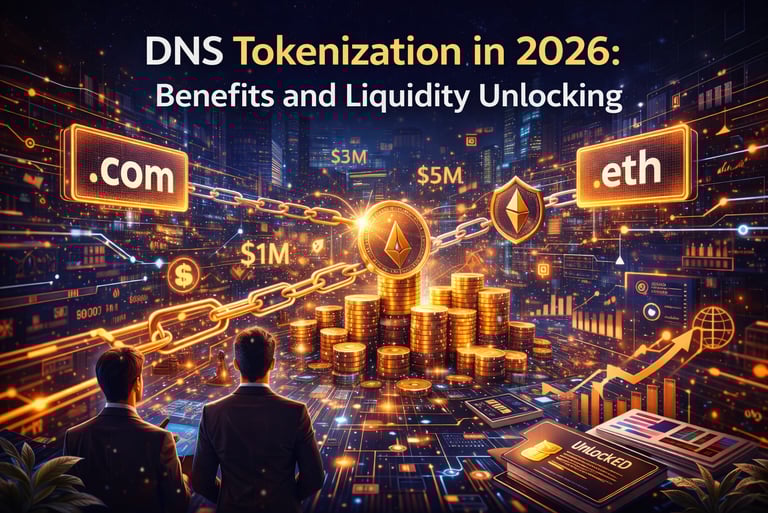

Understanding DNS Tokenization
DNS tokenization is an emerging concept that enables the digitization of domain names by transforming them into tradable assets through blockchain technology. By utilizing tokens, which act as unique identifiers on a blockchain, domain names can be bought, sold, and exchanged much like other digital assets. This innovation serves to enhance the security, liquidity, and accessibility of digital real estate, positioning it as a significant development within the broader blockchain ecosystem.
The primary purpose of DNS tokenization is to unlock the financial potential of domain names, which have traditionally been under-utilized as assets. Tokenization involves encoding the ownership and rights associated with a domain name into a smart contract, which resides on a decentralized platform. This not only streamlines the transfer of domain ownership but also enables fractional ownership, allowing multiple investors to share in the benefits of high-value domains. The integration of DNS tokenization into existing digital economies signifies a shift toward greater democratization of digital assets.
In practical terms, DNS tokenization offers several potential use cases. For instance, businesses can leverage tokenized domain names to raise capital, while investors might find new avenues for portfolio diversification. Additionally, purchasing a tokenized domain could be more versatile than traditional ownership, as tokens may carry additional rights such as advertising revenues or even intellectual property benefits associated with the domain. As the digital landscape evolves, DNS tokenization stands to reshape how individuals and organizations interact with and monetize their online presence, ultimately enhancing the perceived value of digital real estate.
The Evolution of DNS: From Centralization to Tokenization
The Domain Name System (DNS) has undergone significant transformations since its inception, evolving from a highly centralized model into a more decentralized and tokenized framework. Initially designed to address the growing need for a user-friendly way to browse the internet, the traditional DNS relied heavily on a centralized architecture managed by a few authoritative entities, which posed challenges regarding security, reliability, and control.
As internet usage exploded, concerns about censorship and the control wielded by centralized authorities prompted a reevaluation of the DNS system. This scrutiny led to the exploration of decentralized alternatives, with blockchain technology emerging as a promising solution. The introduction of tokenization into the DNS framework not only addresses the pitfalls of centralization but also brings a host of new advantages, including enhanced security and transparency.
The technological advancements that support this transition, such as smart contracts and distributed ledger technology, form the backbone of the tokenized DNS model. These innovations allow for domain ownership verification, automated transactions, and the reduction of intermediaries, resulting in streamlined operations and lowered costs. In addition, the decentralized nature inherent to tokenization aligns well with emergent trends in the digital asset ecosystem, where decentralization is becoming increasingly vital.
Furthermore, as investment in decentralized projects has gained momentum in recent years, venture capital trends increasingly reflect a shift toward platforms promoting tokenized assets. Investors now recognize the potential for disruptive innovations within the domain space, motivated by a desire for improved liquidity and governance models through tokenization.
In essence, the evolution of DNS is emblematic of a broader movement within the digital landscape, as technology continues to push boundaries and redefine traditional frameworks. The shift toward tokenization signifies not merely a change in method but a fundamental rethinking of internet resource management.
Investor Perception and Credibility in a Tokenized Future
The emergence of DNS tokenization in 2026 marks a significant shift in how investors perceive assets and engage with digital markets. By converting domain names into tokenized assets, the underlying principles of ownership and trade efficacy are redefined, thereby enhancing both investor confidence and market liquidity. Tokenization facilitates a transparent system where each asset can be tracked and verified on the blockchain. This transparency plays a crucial role in building trust, as investors can easily ascertain the authenticity and provenance of their assets.
In terms of branding and memorability, a tokenized DNS asset carries a unique digital identity that can significantly increase its visibility in a competitive marketplace. Investors are more inclined to associate their portfolios with recognizable brands that are secured through tokenization, leading to a perceived increase in credibility. The psychological impact of ownership is further amplified by immutability and the assurance provided through blockchain technology, which work to mitigate the risks associated with traditional investments.
Additionally, investors are often influenced by cognitive biases such as the anchoring effect, where initial information regarding the investment significantly affects subsequent decisions. By leveraging well-established brand identities through tokenization, investors can be anchored to positive notions of trustworthiness and reliability. This fostering of credibility not only enhances individual asset values but also promotes a more robust market infrastructure for tokenized DNS assets.
As the market matures, the understanding of tokenized assets will evolve, leading to increased acceptance among investors. The psychological landscape of investing will further shift, as tokenization paves the way for enhanced due diligence and risk assessment. In developing a tokenized strategy, stakeholders can leverage these psychological factors to foster a climate of trust, ultimately encouraging wider participation in a rapidly changing digital economy.
Unlocking Liquidity: The Benefits of DNS Tokenization
DNS tokenization serves as a potential catalyst for unlocking liquidity within the digital assets landscape. Over the years, the financial ecosystem has witnessed a paradigm shift towards decentralized finance (DeFi) mechanisms that enhance liquidity, and DNS tokenization introduces a promising avenue for extending these benefits further.
By converting traditional domain names into fungible tokens, DNS tokenization democratizes access to digital assets. This process allows for the fractional ownership of domain names, providing individual investors and startup entities with an unprecedented opportunity to participate in high-value digital properties. Instead of a single owner, multiple token holders can benefit from the asset's appreciation and revenue-generating capabilities, thereby pooling resources and diversifying risk.
Several theoretical models and case studies highlight the successful application of DNS tokenization. For instance, in scenarios where a premium domain name, previously inaccessible to smaller investors, is tokenized, it can become a collective investment opportunity. This unlocking of liquidity not only increases the asset's market activity but also facilitates price discovery, ultimately benefiting all parties involved. Furthermore, increased transaction volume creates additional data points for analytics, allowing users to make informed decisions based on emerging trends.
Theoretical frameworks suggest that when domain names are tokenized, they gain exposure to liquidity pools in the broader DeFi ecosystem. Such integration could lead to enhanced valuation metrics and provide startups with critical funding avenues. Tokenization can also facilitate cross-border transactions, increasing reach and accessibility for international investors looking to enter the digital asset space.
In summary, the benefits of DNS tokenization extend beyond ownership; they pave the way for innovative liquidity options. By harnessing the potential of domain name assets through tokenization, stakeholders can unlock new channels for investment and collaborative growth. As 2026 approaches, the evolution of DNS tokenization appears promising, setting the stage for a transformation in how digital assets are managed and traded.
Branding in a Tokenized Environment: Building Trust and Memorability
As we delve into the realm of DNS tokenization, it becomes evident that this innovative technology serves as a powerful catalyst for branding efforts. By facilitating the tokenization of digital assets, businesses can enhance their visibility and establish trust in an increasingly crowded marketplace. The integration of DNS tokenization into branding strategies allows organizations to craft compelling narratives that resonate with their target audience, thereby fostering memorability and recognition.
The very essence of DNS tokenization lies in its ability to create unique and identifiable digital assets. When brands tokenize their assets, they not only assert ownership but also leverage the transparency and security that blockchain technology inherently provides. This transparency acts as a trust signal to consumers, who are increasingly discerning about the authenticity of the brands they engage with. A brand that embraces DNS tokenization can position itself as forward-thinking and committed to innovation, traits that consumers find appealing.
To effectively utilize DNS tokenization for branding, companies should focus on creating engaging stories around their tokens. These narratives should highlight the brand’s values and mission, creating an emotional connection with potential customers. For instance, brands can showcase how their tokenized assets contribute to community initiatives or sustainability efforts, aligning their business objectives with consumer values. This alignment not only enhances brand recall but also positions the brand as a trusted leader in its industry.
Moreover, how a brand engages with its audience through tokenized strategies can cultivate a sense of community. Consumer interaction through token issuance and rewards systems can significantly enhance brand loyalty and foster long-term relationships. In the end, the effective use of DNS tokenization can create a robust platform for brands not only to enhance their visibility but also to instill trust and memorability in the minds of consumers.
SEO, Traffic Growth, and the Digital Asset Strategy
As businesses navigate the complexities of the digital landscape, DNS tokenization presents a unique opportunity to enhance their online presence significantly. In 2026, the intersection of digital marketing and advanced technologies like DNS tokenization is poised to influence strategies aimed at driving traffic and improving overall search engine optimization (SEO). By transforming traditional domain name systems into tokenized assets, companies can leverage the inherent advantages these tokens provide to boost discoverability and engage more effectively with their target audiences.
The implementation of a tokenized DNS can directly affect a company’s SEO strategy. Tokenization allows for greater transparency and security in managing domain names, which in turn boosts confidence among potential customers. This increased trust can enhance traffic as visitors feel more secure engaging with businesses that utilize advanced technologies. Furthermore, tokenized DNS can lead to improved indexing by search engines, allowing websites to achieve higher search rankings, ultimately increasing visibility.
Startups operating in a competitive digital marketplace stand to gain strategically from adopting DNS tokenization. This technology provides an edge by allowing businesses to create memorable, unique domain names that stand out in search results. The rarity and value of tokenized domains can enhance marketing campaigns, driving both organic and paid traffic growth. Our digital asset strategies must consider the pivotal role that tokenized domains will play in establishing brand authority. In a crowded market, businesses that embrace this innovation are better positioned to capture the attention of potential customers and drive conversion.
In summary, DNS tokenization could serve as a catalyst for digital marketing strategies by enhancing SEO performance, increasing website traffic, and providing startups with a technological edge. By investing in tokenized DNS, businesses can create a robust online footprint, ensuring they remain competitive in an ever-evolving digital marketplace.
Risk and Defensibility in Tokenized DNS Ventures
As with any emerging technology, DNS tokenization presents a range of inherent risks that businesses must navigate. Market volatility is a significant concern, as tokenized assets can experience rapid fluctuations in value, leading to potential financial losses. This volatility may stem from consumer sentiment, regulatory changes, and overall market dynamics, requiring businesses to remain vigilant and adaptable in their approaches.
Furthermore, regulatory challenges pose a substantial risk to those venturing into tokenized DNS. The regulatory landscape is still evolving, with governments and institutions around the world grappling with the implications of blockchain technology and tokenization. Businesses need to stay informed about current regulations and anticipate future changes that could impact their operations. Non-compliance could result in penalties, legal action, and damage to credibility.
To effectively adopt tokenized DNS and mitigate associated risks, businesses should establish defensible strategies. This begins with conducting thorough market research to understand the landscape and identify potential threats. Engaging with experts in regulatory compliance can help organizations navigate the complexities of the laws governing tokenization. Additionally, implementing risk management frameworks that include diversified investment strategies may shield entities from adverse market movements.
Educating stakeholders about the benefits and risks of DNS tokenization is also vital. This transparency fosters a culture of informed decision-making, which is crucial in times of uncertainty. Furthermore, businesses should continuously monitor the market and regulatory environment, adjusting strategies as necessary to ensure the sustainable operation of their tokenized assets.
In conclusion, while the risks associated with DNS tokenization are significant, they can be effectively managed through proactive strategies. By understanding market dynamics, maintaining compliance, and fostering education, businesses can leverage tokenization to unlock liquidity and innovation without compromising their operational integrity.

Get in touch
Feel free to contact us to inquire about any of the Domains & Digital Identity Assets showcased on our platform. We are open to receiving proposals and evaluating direct purchase offers for all the digital assets featured.
Our team is also available to explore tailored agreements and negotiated sales, ensuring a smooth and efficient acquisition process that aligns with your specific needs.
Connect with us to amplify your identity across both the Domains & Digital Identity Assets landscape. Together, let's redefine the future of digital identities and brands.
Contact us now to elevate your DIDs & Brands to new heights, because in the world of Go DID Go! your Digital Identity is not just owned; it's celebrated!
Contact Us
info@godidgo.com
Quick Links:

© 2026 Powered on Hostinger by Go DID Go! and ChatGPT's linguistic finesse: behind the scenes magic!
Empowering the Web3/Onchain evolution. Building bridges between Web2 & Web3.